01
It plans, then re-plans
A plan written on day one is wrong by week three. The coach re-reads your logged sessions every week and adjusts volume, intensity and exercise selection to match what actually happened.
Not a chatbot bolted onto a workout log. A coach that holds your goal, your schedule, your equipment and your history in view at once, and rewrites the plan when any of them move.
Goal, days you can train, how long a session can run, the equipment you can reach, the joints that complain. It's a real questionnaire rather than three dropdowns, because three dropdowns can't tell the difference between two very different lifters.
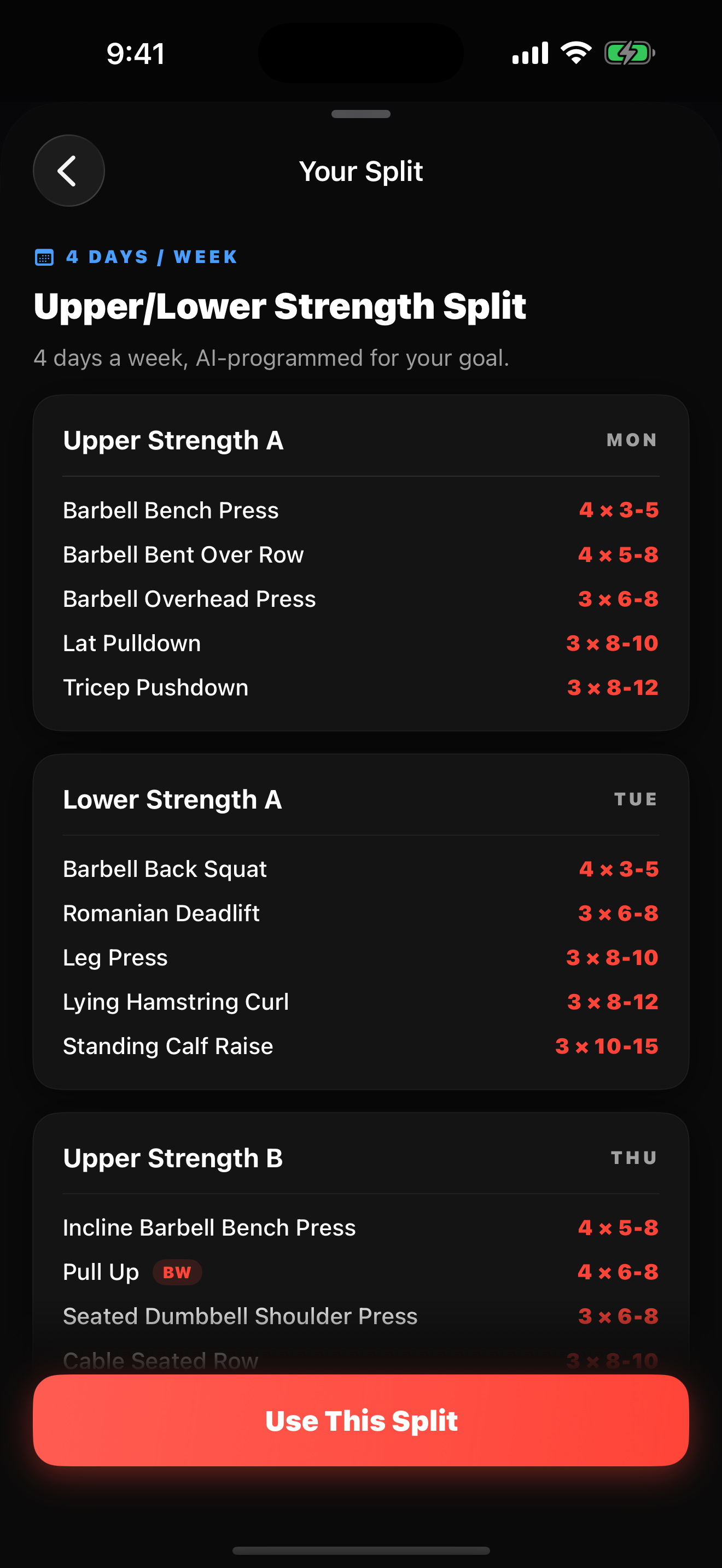
You missed Wednesday. Bench moved backwards. Your shoulder's been off for ten days. Each of those changes what next week should be, and the coach treats them as information rather than as failure to comply.
A quick check-in sets the tone for the day: energy, soreness, time available. Afterwards you get a note on what the session meant for the block, not a badge. The coach is talking about your training, so it has your training in front of it.
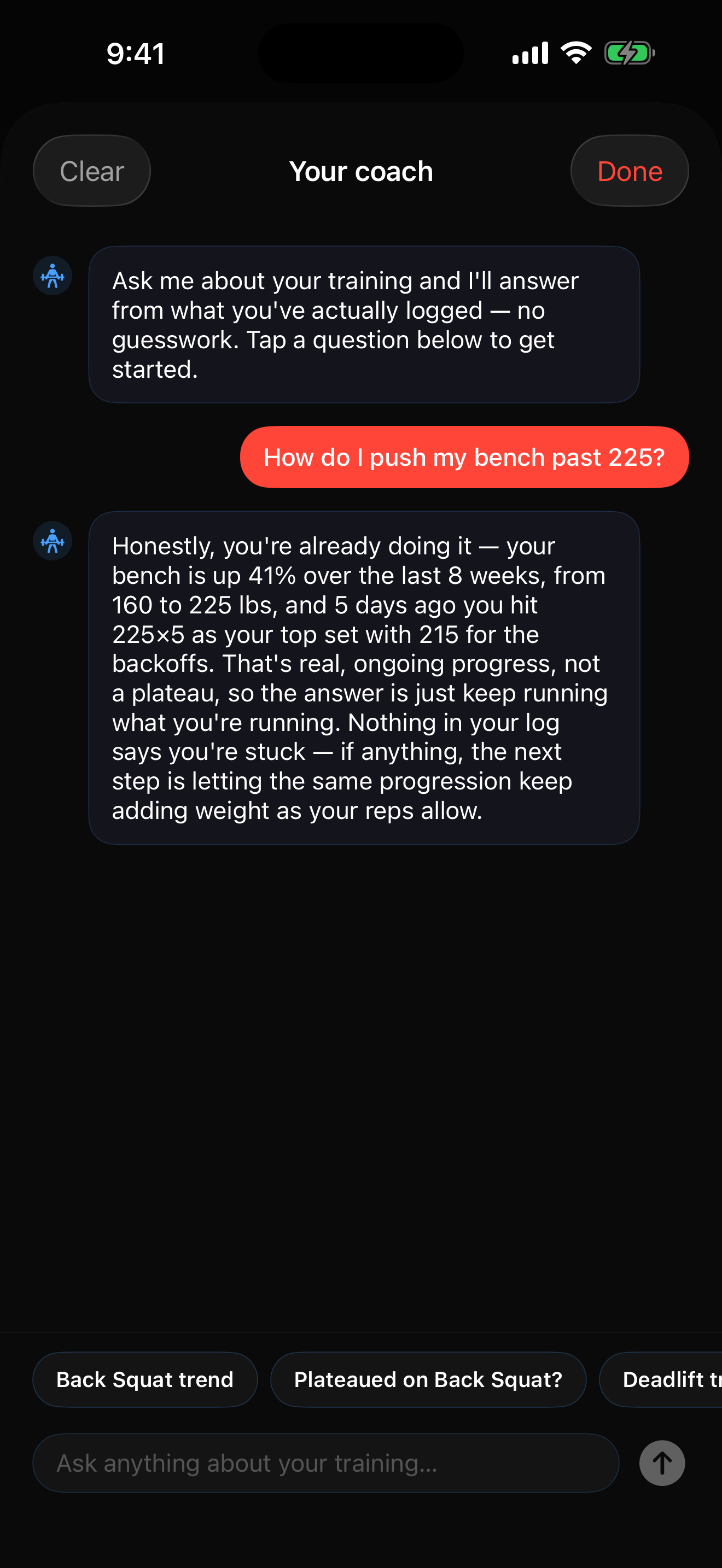
A coach only earns the name if the numbers move. That's the measure SetPR holds itself to, not sessions logged and not streaks kept.
A plan written on day one is wrong by week three. The coach re-reads your logged sessions every week and adjusts volume, intensity and exercise selection to match what actually happened.
Language models are good at understanding your situation and bad at arithmetic. So the coach reasons about your training in language and calculates every weight, set and progression in code.
A programme full of lifts you can't perform is a programme you'll abandon. Tell it what's in your gym once and every exercise it picks is one you can actually do.
Nominate your priority lifts and they get defended first when the week has to shrink. What gets cut is decided on purpose, not by whatever came last in the list.